Technical article
Small Orders Deserve Real Supplier Support: A Buyer's Perspective on Instrument Manuals
by Marcus Feld
An office administrator who handles process instrument purchasing explains why small POs should still get proper support, with examples from Endress+Hauser pressure transmitter and radar level transmitter manuals.
I'm the person who signs the purchase orders. Not the plant engineer. Not the maintenance supervisor. The office administrator who gets asked to find a "pressure transmitter" before 4 p.m. and somehow make the vendor invoice match the PO.
After five years of doing this for a 120-person manufacturing site—processing roughly 60–80 orders a year, maybe 80 depending on the quarter—I've landed on an opinion I won't apologize for: a small order doesn't justify small support. If the PO is $200 or $20,000, the effort a vendor puts into answering a basic question tells you how they'll handle a real problem later.
Most buyers focus on price and completely miss the documentation that comes with the instrument. I've done it myself. When I took over purchasing in 2020, I picked a level sensor based on price alone. It was the lowest quote by a noticeable margin. The sensor arrived, and the manual was three pages. No wiring diagram, no troubleshooting table. We had to call, wait on hold, and then wait for a callback. I ended up eating the labor cost.
The question everyone asks is "What's your best price?" The question they should ask is "What documentation and support do I get with it?"
Great Manuals Are the Quiet Salespeople
I know a manual doesn't sound exciting. But when you're not the technical expert, the manual has to do the explaining for you. A good one lets me hand it to a technician and say "here, this should answer it." A bad one makes me look like I didn't check.
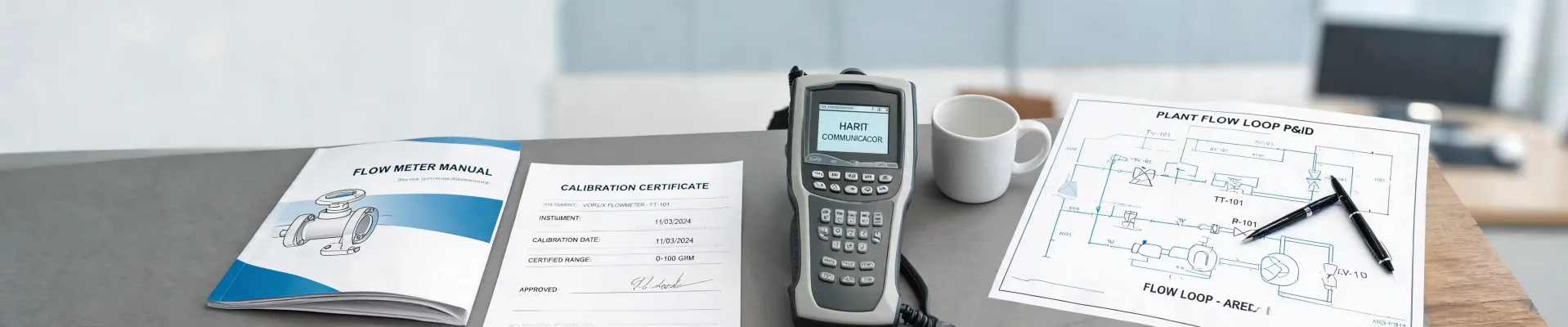
Take the Endress+Hauser pressure transmitter manual as an example. I've downloaded probably a dozen instrument manuals over the years, and this one stood out because it had a table of contents, proper wiring diagrams, and commissioning steps that didn't assume I already knew the answer. That sounds basic, but you'd be surprised how many vendor manuals are simply marketing brochures with a pinout at the end.
Last year I ordered a radar level transmitter Endress+Hauser for our tank farm. It wasn't a big order—a single unit plus a spare—but the manual included mounting examples and a quick start page. I didn't have to chase the rep. I just read the PDF. That's a huge win from my side of the desk.
Small Orders Are How Larger Relationships Begin
Here's the part I don't think enough suppliers understand: a small order is usually a test. When I started, I didn't know which vendors were reliable, so I spread small orders around to see who would take them seriously. The vendors who treated my first $400 order like it mattered are the ones who ended up getting the $15,000 orders later.
I've seen companies turn away small buyers because of minimums or "strategic account" filters. That's their right. But if you do that, you shouldn't be surprised when that small company grows into a decent account and goes somewhere else. Small doesn't mean unimportant. It means unproven.
I'll say it another way: when I was starting out, the vendors who answered my stupid questions are the ones I still call today.
Technical Questions Are Not a Reason to Ignore Someone
Sometimes the "small" question is the one that exposes a gap. A technician asked me to order a 112 multimeter for the maintenance team. Easy. But then he asked whether it could measure a 4–20 mA loop on a level transmitter. I had no idea. I had to search the manufacturer's site, then look for the manual, then cross-check the loop wiring.
Another week, a new hire asked me "how does FLIR thermal camera work?" I said it "sees heat," which is true but useless. The full answer involves emissivity, infrared detectors, and calibration. I ended up reading a support article from the camera manufacturer that explained it in plain language. That vendor made an effort. It stayed with me.
Don't let the person on the other end of the phone make you feel dumb. A vendor that can answer an entry-level question with patience is a vendor that probably documents their instruments well.
Comparing Two Supplier Experiences Changed My View
When I compared two supplier experiences side by side—one that sent a proper manual and one that sent a QR code to a login portal that didn't work—I finally understood why documentation is part of the product. The instrument may perform identically on paper. But you're not buying a device; you're buying the ability to make it work without losing a week.
That contrast showed up in other ways too. The vendor with the good manual had a support line that actually answered. The other one had a sales rep who stopped returning calls after the invoice went out. I'm not making that up.
Yes, Small Orders Cost More to Support. I Get It.
Every order has overhead. I understand that. A $300 level sensor doesn't cover engineering calls, training, and a dedicated account manager. I'm not asking for that.
What I'm asking for is honesty. If a small order only includes a manual and a phone number, tell me that. Don't send me the invoice and then disappear. And if the manual is the main deliverable—which, for a small order, it often is—then make it a decent one.
I'm not going to demand a discount on a radar level transmitter Endress+Hauser or expect white-glove onboarding for one unit. I don't need the vendor to pretend I'm their largest account. I need them to treat me like a customer.
Where That Leaves Me
I still don't know everything about process automation. I do know which vendors make my job easier. The ones that give me clear manuals, answer before I call twice, and don't ghost me after a small PO—those are the ones that keep my business.
I'll keep buying from Endress+Hauser for that simple reason. Not because they're flashy, and not because they're the only option. Because when I asked for a pressure transmitter manual, they gave me one I could actually use. That kind of support doesn't cost extra. It just takes an attitude—one where the customer's size doesn't change the effort.

Marcus Feld
Marcus Feld is an electrical test and measurement analyst specializing in multimeters, oscilloscopes, clamp meters, insulation testers, spectrum analyzers, and data loggers. He applies IEC 61010-2-030 and IEC 61010-031 concepts while examining measurement category, bandwidth, true-RMS response, input loading, and stated uncertainty. His work helps maintenance engineers and test teams choose safe instruments with performance suited to the signals and environments they actually measure.