Technical article
Why Your Endress+Hauser Flow Transmitter Probably Isn't the Problem
by Marcus Feld
Why your Endress+Hauser flow transmitter gets blamed for failures that aren't its fault—and how process sensors really compare with Omron and Keyence.
Last March, we lost a $48,000 batch because a flow totalizer came in about 1.4 percent low. The operator was certain the Endress+Hauser flow transmitter was bad. I shut the line down, quarantined the batch, and pulled the device for bench testing.
It wasn't the transmitter. When I fed the electronics a known reference signal, the output tracked within 0.07 percent. The real problem was a cable shield that was never terminated, which let VFD noise bleed into the 4-20 mA loop. To the operator, that was a sensor failure. To anyone who actually tests instruments, it was just another Tuesday.
If you've ever had a 'failed' transmitter work perfectly on the repair bench, you know where this is going. The device is often the last thing that's actually wrong.
I'm a quality engineer at a specialty food-ingredient plant, and I review about 170 instruments a year before they're allowed into production. I also handle every return that comes back with a 'this one's bad' note. It's a job that has made me deeply suspicious of the word 'failed.'
I Keep a Log of Every 'Failed' Transmitter
I started keeping a formal investigation log in 2021. Not a simple spreadsheet, but a full record: what the complaint said, what I tested, what I actually found. Between 2021 and 2024, I logged 173 transmitters.
Only 27 needed board-level repair. That's about 16 percent. The other 146 devices measured fine on the bench. The causes were almost always external: bad wiring, poor grounding, wrong configuration, or an instrument selected for a job it was never meant to do.
The uncomfortable conclusion from my log is this: fewer than one in five 'failed' transmitters actually failed. Think about what that means. If we replace a transmitter because of a false positive, we don't fix the root cause. We burn the budget for a new instrument, lose production during the swap, and the replacement eventually gets blamed for the same underlying issue. I've watched that cycle repeat three times on one skid before somebody finally checked the grounding.
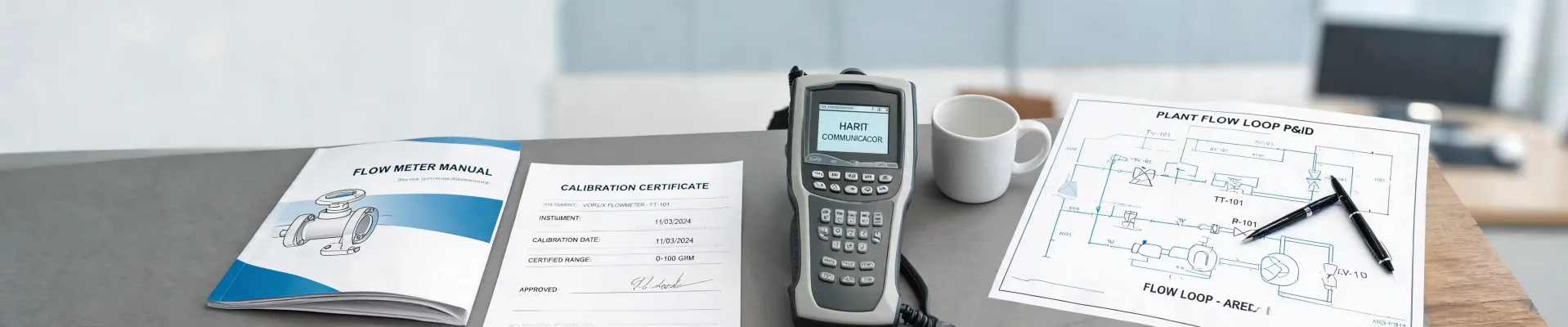
My bench setup isn't fancy: function generators for input simulation, a loop calibrator, and a Fluke 85 multimeter that's older than some of our junior technicians. It still reads milliamps reliably. If a transmitter tracks a known input cleanly, the transmitter isn't the problem. That simple test has saved us more money than any troubleshooting manual I own.
Comparing Endress+Hauser With Omron and Keyence: Same Word, Different Worlds
At least once a quarter, procurement asks me some version of: 'How do Endress+Hauser sensors compare with Omron and Keyence?' The question sounds reasonable, but it mixes two categories that only share the word 'sensor.'
Omron and Keyence build excellent sensors for factory automation. Photoelectric presence detection, proximity, vision, part counting, code reading—those are discrete, high-speed, mostly on/off decisions in controlled factory conditions. Their products are good at what they do. They just aren't process instruments.
Endress+Hauser plays in a different arena. Process instrumentation measures continuous variables: flow, level, pressure, temperature, pH, conductivity. These instruments are expected to survive process connections, vibration, temperature swings, pulsating flow, hazardous-area classifications, and to hold accuracy for years—not for a single production cycle.
So when the question is 'compare with Omron or Keyence,' my answer depends on what you need to sense. Put a photoelectric sensor on a live steam line and the datasheet won't matter for long. Put a Coriolis flowmeter on a bottle inspection line and you'll get a brilliant measurement you don't need at a price you definitely don't want.
'How does an Endress+Hauser sensor compare with an Omron or Keyence sensor?' is the wrong question. The right question is: what is this sensor being asked to survive?
I think the 'a sensor is a sensor' belief is a holdover from an era when sensors were mostly switches. That era ended decades ago. Continuous process measurement is a different engineering problem, and buying it the same way you buy discrete sensors is how false failures start.
What a False Failure Actually Costs
Let's go back to that March batch. The direct loss was $48,000 in raw ingredients, plus about $9,000 in disposal, cleaning, and overtime. The indirect loss was worse: two customer orders shipped late, and a follow-up audit question about our reliability. It took us five years to get on that customer's approved vendor list. One bad batch gets remembered.
Here's the part that keeps me up at night: we almost blamed the meter and stopped. If we'd replaced the transmitter instead of investigating the loop, the new meter would have failed the same way, and we would have learned nothing. We would have a 'bad supplier' instead of a bad installation.
People treat the instrument as the last line of defense. In reality, it's usually the first thing accused. A $4,000 transmitter can be innocent while the plant loses many times that amount around it. The equipment isn't the whole system, but it's the only part with a label on it.
In 2023, I made the opposite mistake. We had a two-hour deadline to get a line running, and I installed a replacement transmitter without doing the bench test first. It was configured for the wrong units. We spent a full day chasing a problem that a 15-minute verification would have caught. I still kick myself for that.
What I Do Differently Now
I've simplified my own rules since that $48,000 batch. They're not complicated:
- Match the instrument to the application, not the datasheet headline.
- Bench test every transmitter before installation—even if it's urgent. Especially if it's urgent.
- Check the loop before blaming the device: grounding, cable, configuration, actual process conditions.
- Keep evidence. A verification report protects you from the next 'the sensor is wrong' conversation.
This is where Endress+Hauser support comes into my story. It's not that their devices never have a problem. I've rejected Endress+Hauser equipment twice—once for a damaged display, once for an incorrect tag. Neither became an argument. That's how I judge a supplier: not by zero defects, but by how they respond when something shows up.
When we've had genuine application questions, Endress+Hauser support has been consistently useful. The documentation is searchable, the local support team answers, and the Heartbeat verification feature on their transmitters gives me a documented health report without taking the line down. For a quality engineer, that audit trail is gold.
Bottom line: a measurement is only as trustworthy as the entire loop around it. Stop blaming the transmitter first. Take it from someone who has spent four years telling operators their transmitter was innocent.
Quality isn't a number in a spec sheet. It's the absence of surprises—and the knowledge that when a surprise happens, you can trace it to a real cause.

Marcus Feld
Marcus Feld is an electrical test and measurement analyst specializing in multimeters, oscilloscopes, clamp meters, insulation testers, spectrum analyzers, and data loggers. He applies IEC 61010-2-030 and IEC 61010-031 concepts while examining measurement category, bandwidth, true-RMS response, input loading, and stated uncertainty. His work helps maintenance engineers and test teams choose safe instruments with performance suited to the signals and environments they actually measure.