Technical article
Why Cheap Measurement Instruments Are a Brand Killer
by Marcus Feld
From Endress+Hauser conductivity sensors to Starrett vs Mitutoyo digital calipers, here's why quality in measurement tools directly impacts your bottom line and brand reputation.
Quality Is Not a Cost—It's Your Brand
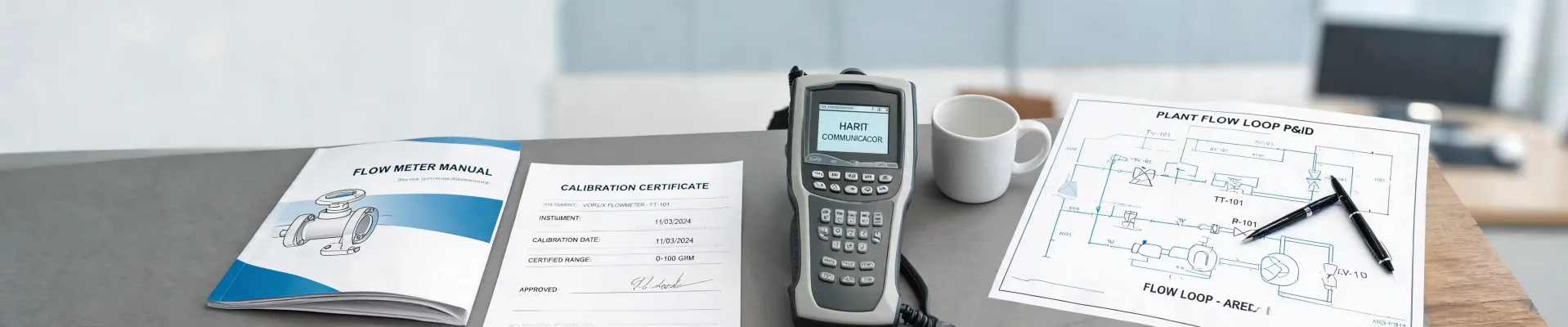
If you're buying measurement instruments based on price alone, you're making a costly mistake. Quality isn't a luxury—it's the foundation of your brand's reputation. I've spent five years coordinating emergency procurement for a process automation company, handling over 200 rush orders. In that time, I've seen what happens when a flow meter fails mid-batch, or a conductivity sensor drifts during a critical reaction. The cost isn't just the replacement part. It's the downtime, the scrapped product, and the client who starts wondering if you're as reliable as they thought.
Let me be clear: I'm not saying you should always buy the most expensive option. I'm saying you should understand what quality actually buys you. And most people don't.
The Hidden Cost of a Cheap Sensor
Take Endress+Hauser conductivity sensors. They're not the cheapest on the market. But their accuracy and long-term stability mean fewer calibration headaches. According to Endress+Hauser's technical documentation, their conductivity sensors are designed for long-term stability in harsh environments—a claim that translates to real-world reliability. In March 2024, a client called me at 6 PM on a Friday. Their budget conductivity sensor had drifted by 15% overnight, and they had a batch of pharmaceutical-grade water that had to ship Monday morning. Normal turnaround for a replacement sensor was three days. We found a local distributor with an Endress+Hauser sensor, paid $800 extra in rush fees, and had it installed by Saturday noon. The client's alternative was a $45,000 batch rejection.
What most people don't realize is that "calibration drift" is often a symptom of cheap components, not just wear and tear. A premium sensor might cost twice as much upfront, but it holds its accuracy for years. A budget sensor might need recalibration every three months—and each recalibration is a production stoppage. Do the math. The cheap sensor isn't cheap.
Precision Tools: Starrett vs Mitutoyo
This principle extends beyond industrial sensors. When I compared Starrett and Mitutoyo digital calipers side by side—same specs on paper—I finally understood why precision matters. Both are reputable brands. But after six months of daily use in a machine shop, the Mitutoyo held its zero consistently, while the Starrett needed frequent re-zeroing. For a machinist, that difference translates to scrap parts and wasted time. A $50 difference in price per caliper becomes a $5,000 difference in scrap over a year.
Am I saying Starrett is bad? Not at all. To be fair, both have their place. But if you're running a high-precision operation, the tool that holds its calibration longer is the one that protects your brand. Your customers don't see the caliper. They see the finished part. If that part is out of spec, they blame you—not the tool.
Even Microscopes: The Operating Room Standard
Consider the operating microscope. You wouldn't use a budget microscope for brain surgery. The optical quality directly affects surgical outcomes. The same logic applies to any measurement instrument in a critical process. If you're measuring flow with an Endress+Hauser flow meter, you're paying for reliability that keeps your process within spec. If you're using a cheap alternative, you're gambling with your product quality—and your reputation.
I'm not 100% sure, but I think the premium flow meter paid for itself in under six months through reduced downtime. We saved maybe $3,000—no, closer to $2,500 after accounting for calibration costs. But the real savings were in customer trust. When you deliver on spec, every time, clients notice.
The "Good Enough" Myth
This was true 20 years ago when digital sensors were unreliable. Today, the gap between premium and budget has narrowed in some areas—but not in high-stakes processes. The "good enough" thinking comes from an era when quality was hard to measure. That's changed. With modern data logging, you can see exactly how a sensor performs over time. The data rarely lies.
Why do we still try to save $200 on a sensor that protects a $50,000 batch? Because we focus on the invoice, not the total cost of ownership. It took me four years and about 180 emergency orders to understand that the cheapest instrument is rarely the least expensive.
What About Budget Constraints?
Granted, budgets are real. I get why people go with the cheapest option—especially for non-critical applications. If you're measuring water level in a holding tank, a mid-range sensor might be perfectly fine. But for critical measurements—conductivity in pharmaceutical water, flow in a chemical reactor, or precision in a machine shop—the cost of failure is too high.
Put another way: you don't need the best tool for every job. You need the right tool for the job. And the right tool is the one that keeps your brand's promise. That's the bottom line.
Quality Is Your Brand's Signature
Every time a customer receives a product that meets spec, they trust you a little more. Every time a measurement fails, they trust you less. The instruments you choose—whether an Endress-Hauser flow meter, a Mitutoyo caliper, or a surgical microscope—are not just tools. They're the physical embodiment of your quality standards.
So before you click "buy" on the cheapest option, ask yourself: What does this choice say about my brand? Because your customers are asking the same thing.
Marcus Feld
Marcus Feld is an electrical test and measurement analyst specializing in multimeters, oscilloscopes, clamp meters, insulation testers, spectrum analyzers, and data loggers. He applies IEC 61010-2-030 and IEC 61010-031 concepts while examining measurement category, bandwidth, true-RMS response, input loading, and stated uncertainty. His work helps maintenance engineers and test teams choose safe instruments with performance suited to the signals and environments they actually measure.