Technical article
The Price Tag Lie: How to Avoid Hidden Costs When Buying Process Instruments
by Marcus Feld
A procurement manager shares why cheap level sensors, gas detectors, and calipers end up costing more, and how to fix your buying process.
If you've ever compared quotes for a process instrument and wondered why one vendor is 20% higher for what looks like the same spec, you know the itch to just go with the cheapest. I've been there. But after six years of managing procurement for a mid-sized chemical plant, here's what I've learned: the price on the quote is the least reliable number in the entire calculation.
Most buyers focus on the per-unit price and completely miss calibration, maintenance, and downtime costs that can add 30–50% to the total. The question everyone asks is "What's your best price?" The question they should ask is "What does it cost to keep this thing accurate over its lifetime?"
The False Economy of Upfront Pricing
Back in 2023, I compared level transmitters for one of our storage tanks. The Endress+Hauser model came in at roughly $1,800. A competitor's unit? $1,500. I almost went with the $1,500 unit—until I remembered what had happened the previous year with a "bargain" level sensor.
That budget sensor saved us $300 on the initial purchase. But its drift caused an overfill alarm at 2 a.m. The emergency callout, re-calibration, and lost production ran us $6,400. On a sensor that saved $300. I'm still embarrassed about that one.
The Real Problem: Calibration & Hidden Specs
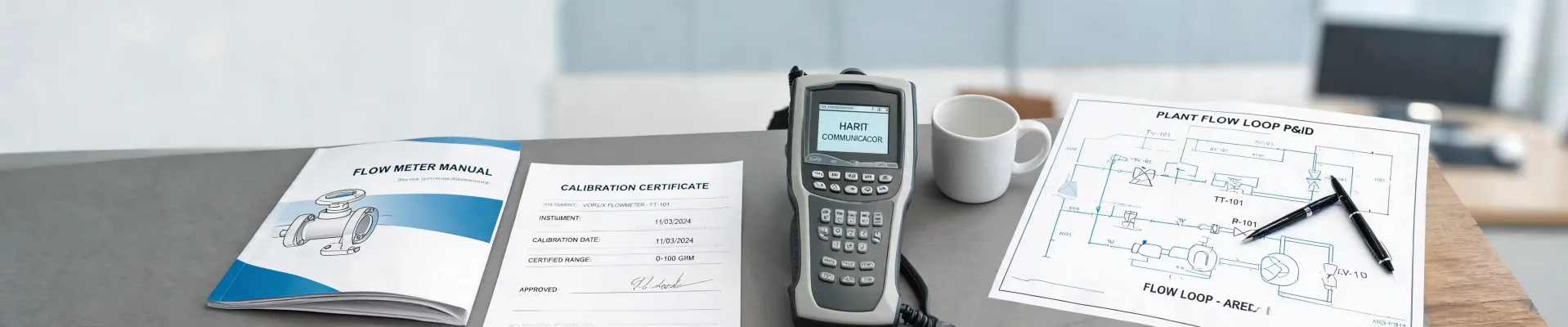
Here's something nobody tells you when you're ordering a level transmitter: the calibration procedure is where the hidden costs live. A transmitter that ships with a factory certificate still needs on-site verification, and the procedure varies wildly between vendors. Endress+Hauser publishes a detailed level transmitter calibration procedure that our technicians can follow without reverse-engineering. With cheaper units, we've spent hours on the phone trying to get documentation that just... didn't exist.
People think expensive vendors deliver better quality. Actually, vendors who deliver quality can charge more—the causation runs the other way. Their cost structure includes proper documentation, reliable drift performance, and support that keeps your plant running.
What Our Spending Data Taught Us
After tracking every invoice over six years, I found that 28% of our budget overruns came from post-purchase costs: calibration, spare parts, and unplanned downtime. Our solution was a total cost of ownership (TCO) threshold for any instrument above $2,000. That changed everything.
Take the EZ40 EZFlex combustible gas detector we ordered in Q2 2024. The unit price was reasonable, but the annual calibration cost was nearly as much as the detector, and the sensor replacement cycle was shorter than the manual suggested. I don't blame the vendor—the specs were in the datasheet. But my team hadn't been trained to read them carefully.
Same story with a simple lab tool. A colleague asked me, "Where can I buy a Mitutoyo 8 inch digital caliper?" He had found a listing at half the usual price. I told him to check the calibration certificate and whether the dealer was actually authorized. The cheap unit had no certificate and a missing IP rating. The genuine dealer price included a traceable calibration certificate and a proper warranty. In our line of work, that's non-negotiable.
Even microscopes follow the same pattern. The price range for a decent metallurgical microscope is staggering. A reputable manufacturer charges more because the optics are consistent and the calibration standard is clearly documented. A cheap unit might pass a basic inspection but fail when you need a precise measurement at 100x magnification. (I should add that we bought one such cheap scope in 2022, and it took two months to get it aligned. We ended up renting a microscope in the meantime.)
How We Buy Now
Without turning this into a pitch, here's the simple fix: calculate the total cost of ownership before you sign anything. Include purchase price, expected calibration costs over the useful life, planned maintenance, and the risk cost of downtime. Add your own technician's time for installation and verification. Then compare vendors on that basis.
And one more thing: good vendors know their limits. The Endress+Hauser rep once told me their pressure transmitters weren't the right fit for an extreme-temperature application we had—and pointed us to another supplier. That honesty earned their flow and level instruments a permanent place on our preferred list. Specialized expertise beats broad promises any day.
So, next time you're staring at a quote, step back. Ask for the calibration procedure. Ask about drift specs. Ask what happens when it fails. The answers will tell you what the instrument really costs—and why a higher upfront price is often the cheapest option.
Marcus Feld
Marcus Feld is an electrical test and measurement analyst specializing in multimeters, oscilloscopes, clamp meters, insulation testers, spectrum analyzers, and data loggers. He applies IEC 61010-2-030 and IEC 61010-031 concepts while examining measurement category, bandwidth, true-RMS response, input loading, and stated uncertainty. His work helps maintenance engineers and test teams choose safe instruments with performance suited to the signals and environments they actually measure.