Technical article
A Practical Checklist for Buying Process Instrumentation: Endress+Hauser, Portable Flow Meters, and Thermal Cameras
by Marcus Feld
An admin buyer's real-world checklist for purchasing process instrumentation—covering Endress+Hauser flow meters, turbidity sensors, wire draw encoders, portable ultrasonic flow meters, and FLIR thermal cameras. Focus on total cost of ownership, not just price.
-
Who Should Use This Checklist
-
Step 1: Push Back on the Part Number
-
Step 2: Sort Out Password and Lockout Questions Before Ordering
-
Step 3: Check the Verification and Documentation Requirements
-
Step 4: Calculate the Installed Cost, Not the Invoice Price
-
Step 5: Put Every Vendor Through the Same TCO Screen
-
Step 6: Buy Through the Right Channel
-
Common Mistakes I've Made So You Can Avoid Them
When I took over purchasing for our plant in 2020, I thought buying a flow meter was like buying a laptop: find the cheapest spec match, order it, done. Three budget overruns and one angry operations manager later, I stopped thinking in unit price. Our plant places 60-80 instrument and spare parts orders a year. As the person who reports to both operations and finance, I need to keep the plant running and the budget honest. Now I use a checklist. If you handle procurement for a plant or maintenance team, these are the six steps I still run through. I'm not an instrument engineer, so this isn't about explaining measurement theory. It's about what to ask before you hit 'submit.'
Who Should Use This Checklist
Use this when you're buying process instrumentation for an existing plant: an Endress+Hauser flow meter, another brand's turbidity sensor, wire draw encoders for linear position feedback, a portable ultrasonic flow meter for verification work, or a thermal camera for predictive maintenance. If you're designing a brand-new plant from scratch, call in a controls engineer. This is for everyday replacements, spare parts, and small-to-medium upgrades.
Step 1: Push Back on the Part Number
Most requests come in as 'we need an endress hauser turbidity sensor' or 'we need a wire draw encoder.' The part number isn't enough. I've learned the hard way: a turbidity sensor from the same family can have a different measuring range, cable length, or connector. A wire draw encoder might look identical but have a different output—4-20 mA vs. SSI vs. 0-10 V. If the request doesn't include a datasheet or the full part number, ask for it. It's easier to send a two-line email than to process a return-and-reorder.
Step 2: Sort Out Password and Lockout Questions Before Ordering
One thing that comes up more often than I expected is the 'endress hauser flow meter password' question. Usually, it means the previous engineer left the device locked, or the commissioning password wasn't recorded. I don't share passwords, and neither should a supplier who cares about liability. The password on Endress+Hauser devices is tied to the specific device and the user's access level. You get it through your local service contact, and in some cases it requires proof of ownership. If your end-user will need to reconfigure the transmitter, build that step into the schedule. A five-minute phone call can turn into a two-day wait.
Step 3: Check the Verification and Documentation Requirements
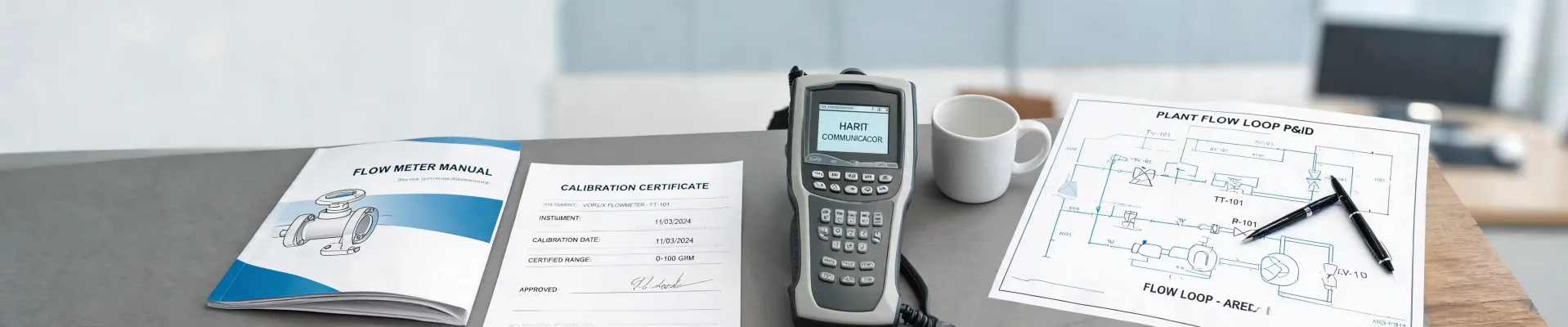
This gets technical, but it matters for cost. When we ordered a portable ultrasonic flow meter, the lowest quote looked great until our technician realized it came with only a basic carry case, no calibration certificate, and no training. Let me rephrase that: the equipment wasn't bad, but the scope of supply was different. For sensors like the Endress+Hauser turbidity sensor, ask whether calibration is required before acceptance. For flow meters, ask about the factory inspection certificate. These documents aren't optional at our plant; they're part of the total cost.
I don't have hard data on how much rework poor documentation causes. What I can say anecdotally is that, out of our last 60 orders, at least four showed up missing paperwork. Every one of those cost an email, a phone call, and a wait.
Step 4: Calculate the Installed Cost, Not the Invoice Price
This is where TCO thinking changes decisions. The purchase price is the first number in a long series. Add shipping, rigging, mounting brackets, adapters, calibration, commissioning, training, and the cost of downtime if it arrives wrong. A $500 wire draw encoder that needs $200 of custom cabling isn't cheaper than a $600 one with the right connector.
Total cost of ownership includes base product price, shipping, setup fees, rush fees, and potential rework costs. The lowest quoted price often isn't the lowest total cost.
The value of guaranteed turnaround isn't just speed—it's certainty. If a line start depends on a verified transmitter, a lower quote with 'estimated' delivery is a risk you can't price easily.
Set up a simple spreadsheet with columns for purchase, shipping, accessories, install labor, documentation, and vendor support. You don't need a finance degree. You need to stop comparing invoice prices.
Step 5: Put Every Vendor Through the Same TCO Screen
For years I used different rules for different vendors. That's fine for relationships, but it makes comparison impossible. Now I ask the same questions: Can they invoice properly? What's the lead time? Who do you call at 4:00 p.m. when the transmitter won't communicate? That last one is the real TCO item. A vendor who returns calls the next morning is worth a 10% markup. A vendor who couldn't provide proper invoicing cost us $2,400 in rejected expenses back in 2021.
I'm not a logistics expert, so I can't speak to carrier optimization. From a purchasing perspective, I focus on the paperwork, the schedule, and the after-order behavior.
Step 6: Buy Through the Right Channel
Where you buy matters. The search phrase 'where to buy flir thermal cameras' is common, and the answer isn't always the first e-commerce listing. Buying from an authorized distributor may not be the absolute cheapest, but it gets you a valid warranty, up-to-date firmware, and honest advice about radiometric calibration. The same logic applies to Endress-Hauser flow meters and sensors. Gray-market gear can save 15-20%, but you can lose that quickly if warranty service isn't honored. At least, that's been my experience with electrical safety equipment and optical instruments. For process instruments, I'd rather buy from an authorized channel and pay a little more.
Common Mistakes I've Made So You Can Avoid Them
- Buying the spare part before checking the manual. We once ordered a replacement encoder before confirming the mechanical interface. The original had a 6 mm shaft; the replacement was also 6 mm, but the mounting bolt pattern was different. It sat in storage for a year.
- Assuming all quotes include calibration. They don't. Ask specifically. On one order, calibration added 18% to the quote.
- Letting a supplier reset a password 'unofficially.' I flagged this to our controls manager after a tech said he could bypass a lockout on an Endress+Hauser transmitter. That creates safety and liability issues, even if it saves time.
This checklist looks boring—because it should. Process instrumentation doesn't need to be exciting. It needs to work, documented, installed, and supported. If you take one thing from it, calculate total cost before you compare prices. And if you don't know the exact part number, don't buy it. Ask.

Marcus Feld
Marcus Feld is an electrical test and measurement analyst specializing in multimeters, oscilloscopes, clamp meters, insulation testers, spectrum analyzers, and data loggers. He applies IEC 61010-2-030 and IEC 61010-031 concepts while examining measurement category, bandwidth, true-RMS response, input loading, and stated uncertainty. His work helps maintenance engineers and test teams choose safe instruments with performance suited to the signals and environments they actually measure.