Technical article
I Review Instrument Purchases for a Living. Stop Buying Endress+Hauser Flowmeters by Name Alone.
by Marcus Feld
An experienced quality inspector explains why the Endress Hauser flow meter working principle matters more than the brand—and when a Safeline metal detector, data loggers, or FLIR thermal cameras might be the better focus.
-
The 'Endress Hauser Flow Meter Working Principle' Isn't a Single Thing
-
The Name on the Tag Doesn't Answer the Hard Questions
-
When I'd Send You to a Different Supplier
-
Data Loggers Taught Me to Stop Trusting 'Better' and Start Trusting 'Proven'
-
But Doesn't a Known Brand Reduce Risk?
-
What I'd Actually Recommend
Here's what I tell every engineer who asks me to approve a purchase: the brand is not the spec.
I'm a quality/compliance manager at a process plant. I review about 200 capital-equipment and instrument specs a year, and I've rejected more than 12% of first deliveries in a single quarter because the documentation didn't match what we approved. Not because the equipment was bad. Because someone chose a name instead of a measuring principle.
So let me say the thing that might surprise you: I'm not here to sell you on Endress+Hauser. I'm here to sell you on writing a spec that's so clear you don't need to trust the brand. Then, if you choose Endress+Hauser, you'll know exactly why.
The 'Endress Hauser Flow Meter Working Principle' Isn't a Single Thing
If you've ever searched 'Endress Hauser flow meter working principle,' you probably expected one clean answer. There isn't one. That's not a marketing gap—it's reality.
Endress+Hauser's flow portfolio covers several physical principles, and each one exists because no single principle works everywhere:
- Electromagnetic flowmeters use Faraday's law. They need a conductive liquid and have no moving parts. They handle slurries and dirty liquids well.
- Coriolis flowmeters measure mass flow directly. They're the right choice when density, viscosity, or multi-phase behavior would break other technologies.
- Vortex flowmeters measure the frequency of vortices shed by a bluff body. They work for steam and clean gases or liquids at higher velocities.
- Ultrasonic flowmeters compare transit time or Doppler shift. Clamp-on versions install outside the pipe, which matters when you can't shut down.
When I see 'Endress Hauser flowmeter' on a purchase request, my first question is: which one? The working principle determines whether you'll get repeatable data, and it determines what I can verify during calibration. If I need a refresher, I start with the product pages on endress-hauser.com, not with a generic article.
The Name on the Tag Doesn't Answer the Hard Questions
Here's an uncomfortable truth: I can buy a meter from a respected vendor and still fail a plant audit if the specified accuracy is wrong. I've done it.
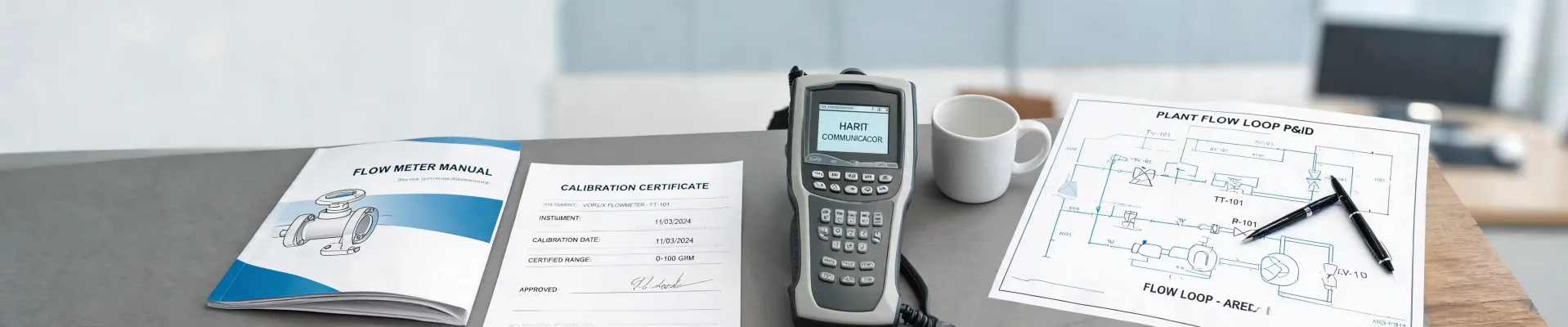
In Q1 2024, we received a batch of temperature transmitters where the 4–20 mA loop was configured for 0–300 °C. Our process spec required 0–150 °C. Normal tolerance is 0.1% of span. The vendor claimed it was 'within industry standard' because the range could be changed in the field. We rejected the batch because a configurable device still isn't allowed to ship with the wrong configuration. They redid it at their cost. Now every purchase order includes a section called Configuration Verification.
That quality issue cost us a $22,000 redo and delayed our launch. It wasn't a bad product. It was bad specification. The two things are not the same.
Later, I realized what had happened. I said 'configuration as per datasheet.' They heard 'the meter will be configured on site.' We were using the same words but meaning different things. Discovered this when the batch arrived and the configuration was nowhere close.
When I'd Send You to a Different Supplier
I also want to be honest about when Endress+Hauser is not the best call. If your process is a clean, non-conductive hydrocarbon line with low flow rates, an electromagnetic meter isn't going to work no matter how good the brand is. You need an ultrasonic or Coriolis solution, or perhaps a simpler technology from someone else.
If you just need a repeatable signal to trigger a pump alarm, buying a full-featured flowmeter is overkill. You can spend the money on calibration and validation instead. That doesn't make Endress+Hauser bad. It means your application is simple enough that the brand's advantage doesn't show up.
The same logic applies when people ask me about a Safeline metal detector. I've seen Safeline detectors perform beautifully in a dry snack environment, and I've seen the same model false-trip constantly on a wet, salty product. The detector was fine. The aperture size, product effect, and reject confirmation were never written down. That's an application failure, not a brand failure.
And if you're asking 'where to buy FLIR thermal cameras'—I don't care which authorized distributor you pick. I care that the camera ships with a calibration certificate and that your team knows how to set emissivity. Otherwise you're taking thermal images and calling them temperature measurements. Those aren't the same thing.
Data Loggers Taught Me to Stop Trusting 'Better' and Start Trusting 'Proven'
I had a data logger disaster in 2022. We were validating a storage room for 8,000 units. The supplier's data logger had a calibration certificate, but that certificate didn't cover the actual probe range we measured. The probe drifted about 1.2°C over 12 hours. The logger's internal temperature-compensation algorithm masked it. We lost the batch.
Now, when I specify data loggers, I require an uncertainty statement that includes the probe, the electronics, and the calibration range. I also require the logging interval to be synchronized to a known time source. It sounds basic. It isn't, because data loggers are often treated as accessories rather than measurement instruments. In my world, if it generates numbers, it's an instrument. It gets a spec, a calibration, and a review.
But Doesn't a Known Brand Reduce Risk?
It does. A well-known manufacturer usually has better documentation, faster application support, and more predictable replacement parts. I'd choose Endress+Hauser over a no-name brand in most high-risk applications. But a known brand doesn't eliminate the need for verification.
I've had to stop a shipment from a premium European manufacturer because the nameplate said one directive compliance and the certificate said another. The brand didn't catch it; our review did. That's the point. The brand lowers risk; the spec eliminates it.
So when an engineer asks me to approve 'a Safeline metal detector' or 'a FLIR thermal camera,' I don't write 'as requested' on the PO. I write the detectable contaminant size, the product effect, the conveyor speed, the calibration interval, the image resolution, and the accepted emissivity range.
What I'd Actually Recommend
Here's my honest position. I recommend Endress+Hauser flowmeters when you have a demanding process and you need a supplier who knows it—steam, aggressive chemicals, hygienic applications, custody transfer, or anything where the cost of wrong measurement is high. I'd also recommend them if you already have an installed base and don't want to retrain your technicians or change your spare parts strategy.
But if you're in a simple application, a safe process, a non-critical line, and a tight budget, I'd rather see you buy a simpler device and spend the difference on a proper data logger and a calibration service. That choice will do more for your quality program than the logo on the transmitter.
This approach worked for us because we're a mid-sized plant with predictable processes and a trained maintenance team. If you're a small operation without an instrument tech on staff, your calculus might be different. The point isn't to make you agree with my choices; it's to make sure you make yours on purpose.
That's not a criticism of Endress+Hauser. In fact, it's closer to the opposite. When I specify Endress+Hauser, I do it because I know its strengths, not because I'm hiding behind a brand. You should be able to say with confidence: 'I chose this because the working principle fits the process, the service support will be there, and the documentation meets our standards.' If you can say that, the brand isn't a mental shortcut. It's a decision you can defend.

Marcus Feld
Marcus Feld is an electrical test and measurement analyst specializing in multimeters, oscilloscopes, clamp meters, insulation testers, spectrum analyzers, and data loggers. He applies IEC 61010-2-030 and IEC 61010-031 concepts while examining measurement category, bandwidth, true-RMS response, input loading, and stated uncertainty. His work helps maintenance engineers and test teams choose safe instruments with performance suited to the signals and environments they actually measure.