Technical article
Endress+Hauser Mass Flow Meter, Fluke 373, 87V Multimeter, and Megger: QA Engineer’s FAQ
by Jane Smith
A QA engineer answers common questions about Endress+Hauser mass flow meters, Fluke 373 clamp meters, 87V industrial multimeters, and Megger insulation testers—including what small buyers should expect.
-
What is an Endress+Hauser mass flow meter?
-
What is an Endress+Hauser thermal mass flow meter?
-
Is a Fluke 373 clamp meter enough for industrial maintenance?
-
Is the Fluke 87V industrial multimeter overkill?
-
What is a Megger insulation tester?
-
What’s the approval checklist before any of these instruments go into service?
-
If I only need one instrument, will my small order get less support?
-
What’s the biggest mistake engineers make with all of these tools?
I’m a quality compliance engineer in process automation. I review every instrument before it leaves the shop—roughly 200 items a quarter. Before that, I spent years on the plant side with a Fluke 87V and a Megger on my bench. So I get questions about both industrial transmitters and handheld test tools. If you’ve been looking for an Endress+Hauser mass flow meter, a 373 clamp meter, an 87V industrial multimeter, or a Megger insulation tester, here’s what I’m usually asked.
- What is an Endress+Hauser mass flow meter?
- What is an Endress+Hauser thermal mass flow meter?
- Is a Fluke 373 clamp meter enough for industrial maintenance?
- Is the Fluke 87V industrial multimeter overkill?
- What is a Megger insulation tester?
- What’s the approval checklist before any of these instruments go into service?
- If I only need one instrument, will my small order get less support?
- What’s the biggest mistake engineers make with all of these tools?
What is an Endress+Hauser mass flow meter?
The best-known Endress+Hauser mass flow meters are built around Coriolis sensing. The Promass line measures true mass flow, density, and temperature, which makes it useful for batching, filling, dosing, and custody transfer where mass is what actually matters. Because the measurement is direct, you don’t need the same temperature/pressure compensation that many volumetric flow meters require.
But “mass flow meter” isn’t one technology. E+H also has thermal, vortex, and ultrasonic meters that can report mass flow after additional process data. So the first question isn’t “which brand”; it’s “which principle fits my fluid?” According to Endress+Hauser’s Promass F product documentation (endress.com), mass flow accuracy can be as tight as ±0.05% of reading. That kind of accuracy matters in some applications, but it isn’t necessary for every simple liquid transfer line. I also check pressure drop, because a Coriolis meter adds restriction, and that can change pump sizing.
What is an Endress+Hauser thermal mass flow meter?
An Endress+Hauser thermal mass flow meter—the t-mass line, for example—measures gas mass flow using heat. A heated sensor is cooled by the gas moving past it, and the meter converts that cooling effect into a mass-flow reading. This works well for compressed air, natural gas, biogas, and similar clean gas applications.
The distinction matters because thermal mass flow is not a general replacement for Coriolis. It is for gases, not liquids. Also, the reading depends on gas composition; if the gas blend changes, the flow reading can drift. I used to think all thermal meters were low-accuracy plant-utility devices. That was true in the past—modern electronics have improved them, but they still aren’t automatic custody-transfer instruments for changing gas blends. Or rather, they can be, if you verify the application carefully. Check the required straight-run and the gas composition range in the manual before you buy.
Is a Fluke 373 clamp meter enough for industrial maintenance?
It depends on the job. According to Fluke’s product page (fluke.com), the Fluke 373 clamp meter is a true-rms AC clamp meter rated to 600 A. For checking motor loads, heater current, panel phases, and general branch-circuit readings, it’s a practical choice. It also measures AC/DC voltage and resistance, so it can double as a basic troubleshooter.
What it doesn’t do is measure DC current through the jaw. If you’re working on DC drives or battery systems, you need a meter with DC current capability. Another thing I don’t think people realize: clamp-meter accuracy assumes the conductor is centered inside the jaw. In Q3 2024, I tested three identical 373s on the same conductor with the clamp placed differently. The spread was over 6% before any meter was defective. That’s not a case against the 373; it’s a case for training people to use it correctly.
Is the Fluke 87V industrial multimeter overkill?
If you work near motor controls, VFDs, switchgear, or other high-energy circuits, no. According to Fluke’s published specifications (fluke.com), the 87V is rated CAT III 1000 V and CAT IV 600 V, with DC voltage accuracy of ±0.05% +1 digit. The safety rating is the part I care about most, because it affects how the meter behaves when a transient hits the input. A cheaper meter can give you readings for years and then fail in the moment you need it.
The 87V also includes LoZ, frequency, capacitance, and Min/Max/Peak, which make drive troubleshooting easier. But if you only need to check 24 VDC control signals in a clean cabinet, you don’t need one. For that use, a simpler meter is fine. I’d rather see a buyer spend the difference on calibration and training than buy a heavy-duty meter and use it once a year.
What is a Megger insulation tester?
Megger is a brand name, but the term is used loosely to mean a megohmmeter—an insulation resistance tester. The tester applies a controlled DC voltage, usually 250 V, 500 V, or 1000 V, between a conductor and ground or between two conductors, then measures leakage resistance in megohms. That tells you whether insulation has been weakened by moisture, aging, or physical damage before the equipment fails.
A regular multimeter can’t do this because it uses too low a voltage to stress the insulation. When an old technician says “we meggered the cable,” they mean they performed this test. Just don’t connect a megger to electronic circuits or components that aren’t rated for the test voltage. I want to say most low-voltage motor windings are tested at 500 V, but don’t quote me on that—always follow the equipment manufacturer’s guidance before selecting a test voltage. For cable testing, the voltage class of the cable matters too.
What’s the approval checklist before any of these instruments go into service?
This is the question I wish more buyers asked. My list looks like this:
- Calibration certificate with a serial number that matches the instrument, plus traceability to a recognized standard.
- Firmware, hardware, and configuration versions match the order.
- Ratings plate matches the application: hazardous-area rating, ingress protection, CAT rating for handheld tools.
- Accuracy acceptance criteria written down before you order, not after delivery.
- For an Endress+Hauser mass flow meter: line size, pressure drop, fluid compatibility, and zero-point stability.
- For a clamp meter or multimeter: input terminals, current ranges, and the safety rating.
- For a Megger insulation tester: output voltage selection, test leads, and whether the instrument records results.
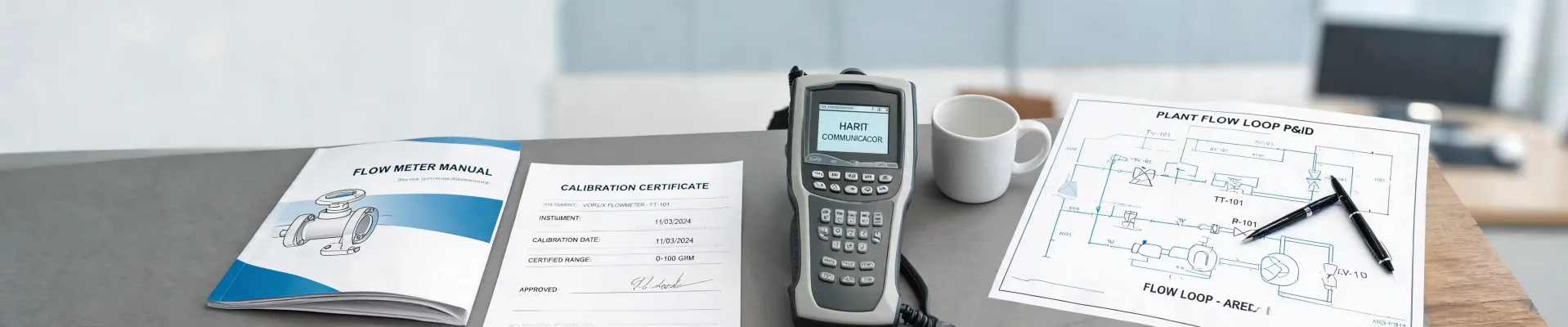
In Q1 2024, I rejected a batch of 240 transmitters because the calibration certificates didn’t match the serial numbers on the instruments. The vendor redid the work at a cost of about $18,000. It taught us to check paperwork before unboxing, not after installation.
If I only need one instrument, will my small order get less support?
I don’t think it should. The way I see it, small doesn’t mean unimportant—it means potential. When I placed my first small order for a handheld meter, I spent about $300 with a distributor. Their engineer stayed on the phone with me for 20 minutes explaining calibration and range selection. That vendor later got much larger orders from us. The service on the small order is the reason.
To be fair, some suppliers do require minimum quantities for custom wetted parts, special fittings, or factory-configured options. That’s a manufacturing reality, not a judgment on your company. But for a standard Endress+Hauser mass flow meter, a Fluke 373, or a Megger tester, a single-item order should still get correct specifications, proper calibration documentation, and straight answers. If you get treated like a nuisance, take it as a warning about future support.
What’s the biggest mistake engineers make with all of these tools?
Assuming the tool does more than its spec sheet says. A Fluke 373 is not a power-quality analyzer. An 87V is not an oscilloscope. A Megger insulation tester is not a cable fault locator. And an Endress+Hauser mass flow meter is not a universal substitute for understanding your fluid. Accuracy figures are quoted under specific reference conditions; the same meter can perform well at 23 °C and poorly if it’s mounted near a steam line.
In my first plant role, I approved a mass flow meter spec based only on the published accuracy figure. I forgot to check zero-point stability. The result was noisy readings at low flow. The vendor was not at fault—I specified the wrong performance requirement. Oh, and check the calibration interval. If you can’t prove when it was last calibrated, you’re not measuring. You’re estimating.

Jane Smith
I’m Jane Smith, a senior content writer with over 15 years of experience in the packaging and printing industry. I specialize in writing about the latest trends, technologies, and best practices in packaging design, sustainability, and printing techniques. My goal is to help businesses understand complex printing processes and design solutions that enhance both product packaging and brand visibility.