Technical article
Why I Always Go for Endress+Hauser for Rush Orders (And Why You Should Too)
by Jane Smith
An admin buyer explains why paying a premium for Endress+Hauser's process instrumentation is worth it when time is tight, based on real-world procurement experience.
-
I'll Say It Upfront: Paying More for Endress+Hauser Is Often the Cheaper Option
-
From a $400 Mistake to a $2,500 Realization
-
Why Endress+Hauser's Documentation Matters More Than You Think
-
The 'Hidden' Cost of Buying Cheap Inductive Sensors
-
But What About Test Leads and Thermal Cameras?
-
What About the 'Budget' Argument?
-
Bottom Line: Time Certainty Is Worth the Premium
I'll Say It Upfront: Paying More for Endress+Hauser Is Often the Cheaper Option
Look, I manage the purchasing for a mid-sized chemical processing plant. When I took over this role in 2022, one of the first things I noticed was the price difference between Endress+Hauser gear and some of the more 'budget-friendly' alternatives. My first instinct was to save money wherever possible. I was wrong.
Here's the thing: in my experience, the premium you pay for Endress+Hauser's process instrumentation—especially their level transmitters and pressure transmitters—isn't about the hardware itself. It's about the certainty that when I place a rush order, the equipment will arrive on time, perform as specified, and not cause a domino effect of delays.
And in a plant where downtime costs roughly $12,000 per hour? That certainty is priceless.
From a $400 Mistake to a $2,500 Realization
In March 2023, we had a critical level transmitter fail on a storage tank. We needed a replacement fast—ideally within 48 hours. The Endress+Hauser unit (their FMR62B series) came with a rush delivery fee that pushed the total to about $2,500. A comparable unit from a lesser-known brand was $1,800 with standard shipping, and they promised it would ship same-day.
I chose the cheaper option. You can probably guess what happened next.
The unit arrived on day three—not day two. The mounting bracket didn't align with our existing process connection. Their tech support took four hours to return my call. We lost a day of production while the tank was offline for manual level checks.
That $700 savings? It cost us more than $10,000 in lost production and expedited shipping for the correct parts from a different vendor. Net loss: roughly $9,300 saved by the 'cheaper' option.
Since then, I've had a simple rule: for any rush order that impacts production, I go with Endress+Hauser. Period.
Why Endress+Hauser's Documentation Matters More Than You Think
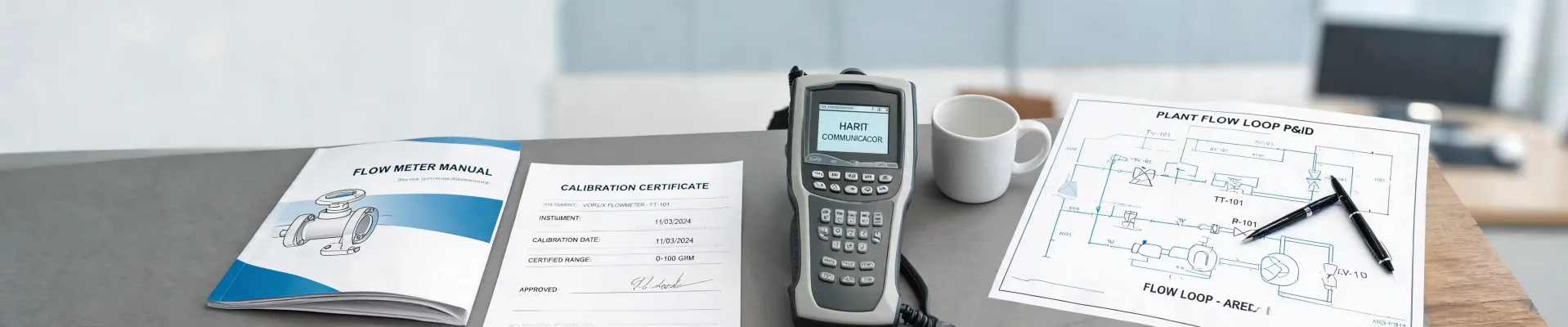
Another thing I've learned: a pressure transmitter manual might seem like a minor detail—until you need to configure it at 2 AM during a plant startup.
When I ordered a Endress+Hauser Cerabar PMP71B for a different project, the manual was clear, searchable, and included step-by-step wiring diagrams for our specific setup. The tech support number was on the first page. I didn't need to call, but knowing I could was a comfort.
Contrast that with a vendor who couldn't provide a proper invoice—let alone a technical manual. I had to hunt down a PDF from a third-party forum, which turned out to be for an older revision. We wired it wrong, fried the board, and the entire replacement cost came out of my department's budget.
Gate: this sounds like a basic expectation, but you'd be surprised how many vendors treat documentation as an afterthought.
Endress+Hauser's level transmitter manuals, for instance, are updated regularly, available online, and include real-world application notes. That's not a 'nice to have' when your plant is running 24/7.
The 'Hidden' Cost of Buying Cheap Inductive Sensors
Let's talk about something smaller: inductive sensors like the M18 series used in position sensing on valves and conveyors.
I once sourced a batch of generic M18 inductive sensors from a new vendor. The price was 40% less than the equivalent Endress+Hauser part. Looked identical. Specs on paper were similar.
Within three months, we had a 15% failure rate. Most failed intermittently—causing phantom valve position signals that shut down a process line for no reason. Each false alarm required a technician to walk out, verify, and reset the system. That cost us time and, more importantly, staff sanity.
When I switched back to Endress+Hauser's inductive sensors, the failure rate dropped to near zero. The 'savings' from the cheap sensors were completely wiped out by the troubleshooting time, re-ordering costs, and lost productivity.
Here's my rule of thumb now: if the sensor is critical path (meaning its failure stops something), I don't buy the cheapest. I buy the one with a proven track record in our environment.
But What About Test Leads and Thermal Cameras?
Now, I know what some of you are thinking: 'You're just saying that because you're biased toward Endress+Hauser. What about other brands for testing equipment?'
Fair point. For things like multimeter test leads and thermal cameras, the dynamic is different. In those categories, I'd argue that brands like Fluke and Flir are often the right choice—especially for field technicians who rely on accuracy and durability.
But here's the catch: even in those categories, the same principle applies. When I need a thermal camera for a safety inspection with a regulatory deadline, I don't go with the no-name brand that's half the price. I get the Flir that I know will work out of the box and come with proper calibration documentation.
The point isn't to blindly favor Endress+Hauser—it's to recognize that for mission-critical, time-sensitive needs, the cost of uncertainty far outweighs the upfront savings.
What About the 'Budget' Argument?
I get it: procurement folks have budget targets. I've been there. In 2024, I got pushed on a vendor consolidation project to reduce costs by 12%. It's tempting to look at the unit price and think 'I can save $800 by going with a different flow meter brand.'
But here's what I've learned: the total cost of ownership includes more than the purchase price. It includes:
- Installation labor (complex wiring? clear instructions?)
- Commissioning time (how long does it take to get online?)
- Maintenance frequency (how often does it drift?)
- Tech support availability (when things go wrong at 3 AM)
- Inventory costs (can you get spare parts quickly?)
For Endress+Hauser, the answer to most of those questions is: 'quickly, easily, and with real support.' For many alternatives, it's a gamble.
And in my world, gambling with production uptime is not a bet worth taking.
Bottom Line: Time Certainty Is Worth the Premium
So when people ask me if they should pay the 'Endress+Hauser tax'—especially for rush orders on level transmitters, pressure transmitters, or critical sensors—I tell them: yes, if you can't afford the risk of uncertainty.
I'm not saying cheaper options are always bad. For non-critical applications, they can make sense. But when a failure or delay could cost you a day of production, a missed deadline, or a reputation hit, the math changes.
That $2,500 Endress+Hauser level transmitter isn't expensive. The alternative just costs more in the long run.
This was accurate as of Q4 2024. The instrumentation market moves fast, and new models come out regularly. Check current specs and pricing before making any big purchasing decisions.

Jane Smith
I’m Jane Smith, a senior content writer with over 15 years of experience in the packaging and printing industry. I specialize in writing about the latest trends, technologies, and best practices in packaging design, sustainability, and printing techniques. My goal is to help businesses understand complex printing processes and design solutions that enhance both product packaging and brand visibility.