Technical article
Endress+Hauser vs. Quick Auxiliary Sensors: What Changes When You're on a Deadline
by Marcus Feld
Compare Endress+Hauser core flow instruments with quick auxiliary sensors in rush plant work. Covers E+H Coriolis mass flow meters, flow meter manual PDFs, dial indicator sets, vibration sensors, and IFM inductive sensor installation.
The Comparison Framework: Core Measurement vs. Auxiliary Sensing
When I'm triaging a rush order in process automation, the first question I ask isn't 'which device is best?' It's 'where does this device sit in the process?' A failing vibration sensor is a problem. A failing Coriolis mass flow meter is a different, bigger problem.
In my role coordinating process instrumentation replacements for plants and skid builders, I've handled more than 200 emergency orders in the past decade. The pattern is consistent: teams that compare the right categories survive deadlines. Teams that compare apples to oranges pay for it.
Here's the comparison I keep coming back to:
- Approach A — Core measurement done properly. This means an Endress+Hauser flow meter or transmitter, the official endress hauser flow meter manual pdf on hand, and a commissioning check that follows it.
- Approach B — Auxiliary sensing done fast. This means limit switches, vibration sensors, and similar devices that can be installed quickly if the mechanical setup is correct.
They are not rivals. They are different categories. But in an emergency, people try to use one to replace the other, and that's where things go wrong.
Where the Two Really Differ: Accuracy and Trust
Let's start with the obvious difference. A coriolis mass flow meter from Endress+Hauser is usually about measuring mass directly. It doesn't rely on volume and density estimates. That's why custody transfer, chemical dosing, and blending applications depend on it. An inductive sensor, by contrast, tells you whether a metal target is present. A vibration sensor tells you whether a machine is becoming rough. Both are useful, but they answer different questions.
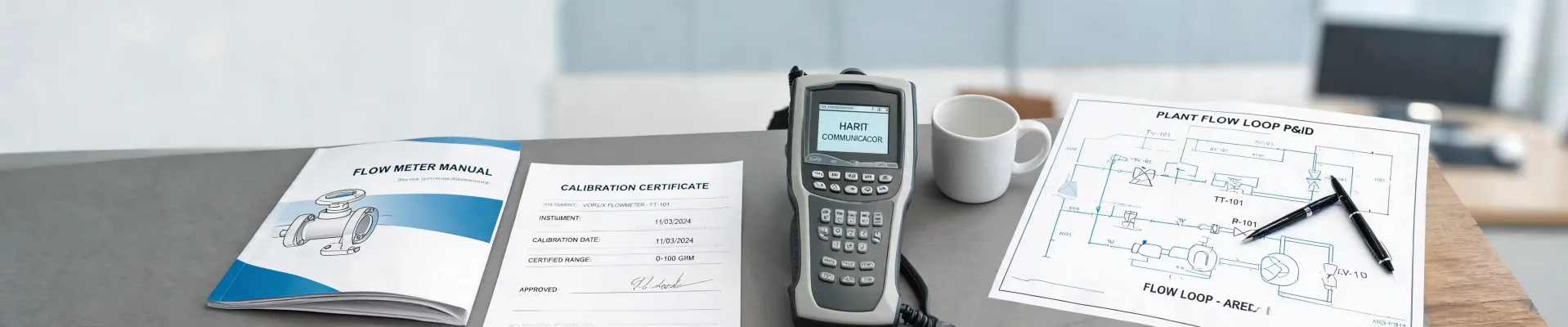
This is also why the manual matters. I've seen plants with three different revisions of the same product manual sitting in a toolbox, and someone pulls the wrong one. The official endress hauser flow meter manual pdf, downloaded from Endress+Hauser's documentation portal (as of January 2025), usually includes the zeroing procedure, mounting requirements, and diagnostic codes. The paper copy from 2011 might not.
Honestly, I'm not sure why some suppliers treat technical manuals like confidential files. Maybe it's about lead generation or avoiding counterfeit products. But in an emergency, that friction costs hours. My best guess is that the best suppliers treat manuals as safety documents, not sales tools.
Per the current Endress+Hauser installation instructions for Promass Coriolis meters, the measuring tubes must be completely full of process fluid before the zero point is adjusted. That's exactly the kind of detail you can't get from a generic blog post.
Dimension conclusion: For core process measurement, choose the instrument that measures what you actually need, and verify the procedure from a current manual. For auxiliary signals, choose a sensor with a clear datasheet and calibrate your work processes accordingly.
Installation Speed vs. Installation Correctness
Conventional wisdom says small sensors are quick and process meters are slow. That's true, but it hides the real lesson: a quick sensor installed incorrectly creates hidden downtime.
An IFM inductive sensor, for example, can be mounted in about twenty minutes. Search how to install ifm inductive sensors step by step and you'll see the same key steps repeated: confirm the target material, mount the sensor on a rigid bracket, set the sensing gap at about 80% of the rated detection distance, lock the nuts, and verify the LED through a full travel cycle.
A Coriolis mass flow meter from Endress+Hauser is not a twenty-minute install. You need to think about orientation, keeping the tube full, grounding, process connections, and zeroing. The manual PDF is not optional. But here's the part that surprises people: the careful path often ends up faster than the careless path, because it doesn't have to be redone.
I still kick myself for a zeroing mistake in 2022. I was in a hurry, assumed the zero procedure was identical to the older model, and didn't check the current manual. The meter drifted for an entire shift before we figured out that an air pocket was trapped. The fix cost an extra $800 in emergency labor. I had spent hours trying to save five minutes.
For mechanical work, a dial indicator set is one of those tools I insist on. It sounds old-school, but measuring shaft runout or coupling alignment before you mount a vibration sensor prevents false trips. A vibration sensor on a misaligned pump will detect the vibration it was never meant to measure.
A Short Checklist for the 'Fast' Sensor Path
- Mechanically mount the inductive sensor on a rigid bracket.
- Adjust the sensing gap to about 80% of the rated detection distance. Check the datasheet if the sensor is flush or non-flush mounted.
- Lock the nuts at the specified torque and leave a service loop on the cable.
- Connect the M12 connector with the correct pinout.
- Test by moving the target at the real process speed, not by hand.
Dimension conclusion: Speed belongs to people who know where the sensor should be, how to fix it, and which documentation is current. A step-by-step installation video can be useful, but it is not a substitute for a datasheet.
Total Cost, Risk, and Why Small Clients Matter
The upfront cost of an Endress+Hauser mass flow meter is higher than the cost of a small inductive sensor. There's no argument there. But total cost of ownership is a different number. If a flow reading is wrong for a day, the product being made is wrong for a day. That waste usually dwarfs the meter price.
I have mixed feelings about rush premiums. On one hand, an expedite fee of 25-50% hurts. On the other hand, I've seen the operational cost of a six-week lead time. In March 2024, we had 36 hours left in a client's scheduled plant turnaround to deliver a replacement Coriolis unit. Normal lead time was six weeks. We paid the premium, found the right Promass, and started up on time. The alternative was extending a six-figure-per-day turnaround. The premium was the cheaper choice.
One of my biggest regrets is not pushing back sooner on a client who wanted to save $1,200 by using a non-certified vibration sensor in a critical area. We followed the vendor's datasheet, but the sensor wasn't suited for the environment, and it failed during startup. We saved money and lost time.
Small clients deserve the same support as large ones. When I was starting out, the vendors who answered my $250 questions seriously are the ones I still call for $50,000 projects. Small doesn't mean unimportant; it means potential. If a supplier won't share a manual before a purchase order, that's a red flag.
Dimension conclusion: Core measurement risk deserves precision equipment and the support that comes with it. Auxiliary sensor risk deserves proper selection and mechanical care. Small budgets are fine, but small thinking about documentation and traceability is expensive.
So Which One Should You Choose?
Use Approach A when:
- The measurement is part of a mass balance, transfer, or final product quality.
- The process can't be operated safely without the value.
- The value needs to be traceable to an instrument with a calibration history.
Use Approach B when:
- You need position feedback, presence detection, or simple machine state.
- A daily check by a skilled maintenance team is enough.
- A nuisance trip is annoying, not catastrophic.
For a high-accuracy flow application, don't improvise. Download the endress hauser flow meter manual pdf from the official channel, check the mounting requirements, and verify zero with the actual process conditions. If you've never commissioned a coriolis mass flow meter endress hauser unit, call the local support office before you cut pipe.
For the rest of the job, use the right auxiliary sensor and install it with care. A dial indicator set for alignment, a vibration sensor with the correct mounting torque, and an inductive sensor positioned at the right gap will keep the process moving without creating new problems.
In process automation, the most expensive sensor is the one that reads beautifully but still lets the wrong product move downstream. Compare by function, not by price tag.
And if you're handling a rush order, my advice is simple: don't take the shortcut if the shortcut means skipping the manual. That one habit has saved me more times than I can count.

Marcus Feld
Marcus Feld is an electrical test and measurement analyst specializing in multimeters, oscilloscopes, clamp meters, insulation testers, spectrum analyzers, and data loggers. He applies IEC 61010-2-030 and IEC 61010-031 concepts while examining measurement category, bandwidth, true-RMS response, input loading, and stated uncertainty. His work helps maintenance engineers and test teams choose safe instruments with performance suited to the signals and environments they actually measure.