Technical article
Endress+Hauser or Specialist Instruments? A Procurement View That Includes a Rice Lake Load Cell Test
by Marcus Feld
I compare two ways to buy process instrumentation: an Endress+Hauser portfolio vs specialist load cells and sensors. Includes flow meter calibration, level transmitter manual, 52 thermometer use, and how to test a Rice Lake load cell.
I need to start with a confession: I do not choose process instruments based only on datasheet accuracy. I choose based on what the full service life is likely to cost: installation labor, manuals, calibration traceability, troubleshooting, downtime, and the occasional surprise. I am a procurement manager at a mid-size food processing plant. For the last six years, I have managed the plant instrument budget, including purchase orders and repair invoices. I do not pretend to know every measurement principle by heart. I do know what our cost records show.
The comparison I keep coming back to is not Endress+Hauser versus one direct competitor. It is a comparison of two buying strategies.
Route A: portfolio buying. Choose one broad process automation supplier for complex, connected measurements. In our plant that means Endress+Hauser for flow meters, level transmitters, pressure transmitters, and the main temperature loops.
Route B: specialist buying. Choose a specialist when the device is simpler and more self-contained. That means Rice Lake load cells for weighing, a dedicated temperature and humidity sensor in a dry storage area, and a Fluke 52 thermometer in the maintenance kit for fast temperature checks.
The interesting part is that neither route wins every dimension.
Dimension 1: Flow meter calibration is not a sticker cost
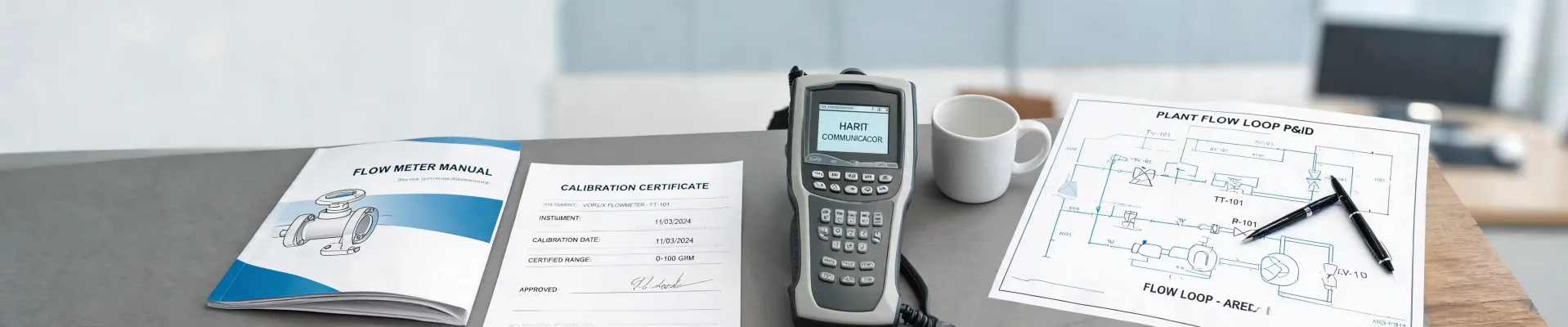
Flow meter calibration tends to be one of the higher recurring costs in our maintenance plan. In our files, every major flowmeter has a schedule, and that schedule often lists endress hauser flow meter calibration as a recurring task. A new Endress+Hauser flowmeter comes with factory calibration documentation tied to the order code. For a clean, stable water line, that certificate is usually enough to justify extending a 12-month calibration interval to 24 months, as long as the device diagnostics are checked and the process has not changed. We did that for one non-custody magnetic meter in 2024. It saved us removal, shipping, reinstallation, and roughly $1,100 in total cost.
On a critical mass-balance line, I still pay for formal calibration traceability. In 2023, I compared a factory flowmeter calibration quote with a local third-party calibration quote. The local quote was lower on paper, but after freight, admin time, and the risk of warranty questions, the saving was only about 15 percent. For a batch that may be released based on that measurement, 15 percent is not worth losing the manufacturer audit trail.
Dimension verdict: Route A for critical process meters. Route B for auxiliary meters that are not part of a quality or custody decision.
Dimension 2: Manual access is part of total cost
When a transmitter fails at 2 a.m., documentation determines whether the fix takes 20 minutes or a service call. If I need to look up a wiring detail, I can usually search for the endress hauser level transmitter manual on the manufacturer public support site and get a PDF by order code. That is not only a marketing point; it saves our maintenance crew real time. Last month, a level transmitter was reading high in a storage tank. The manual showed that the transmitter was still in simulation mode from a previous test. A senior technician thought it was a failed instrument. The manual solved the problem before a replacement was ordered.
Specialist documentation can also be good. Rice Lake publishes load cell specifications and troubleshooting guides, which makes Route B practical for weighing.
The weak spot is a low-cost temperature and humidity sensor. We have one in a dryer room whose manual is a scan with unclear terminal labels. The sensor itself is not bad; the support documentation is bad. In that case, a cheap device becomes expensive every time someone has to re-learn its setup.
Dimension verdict: Route A wins for main process instruments because documentation is tied to the device type and order code. Route B can still work when the specialist supplier provides clean documents. The cost problem appears when the manual disappears and the device becomes a mystery box.
Dimension 3: Testing a load cell before replacing it
This is where my original opinion changed. I used to assume that using the same vendor everywhere would reduce complexity. For load cells, the opposite happened.
A few years ago, a maintenance supervisor asked how to test a Rice Lake load cell before scheduling a service call. The answer is simpler than most people expect:
- Turn off the indicator and disconnect the load cell from the junction box.
- Use a multimeter to measure the input resistance between the excitation wires. For the 350-ohm cell we stock, this should read close to 350 ohms. Compare the reading with the values on the load cell test certificate. An open circuit or a large shift means the bridge is damaged.
- Measure the output resistance between the signal wires in the same way.
- Check each conductor against the cable shield. The reading should be very high resistance or open. If you see a low reading, moisture has probably entered the cable. This is one of the most common causes of load cell failure in washdown areas.
- Reconnect the cell, power the scale up, zero it, and test with a known weight. Also check for mechanical binding; a stuck bumper or foreign object can imitate a failed load cell.
This basic test does not replace a calibration lab. It helps decide whether a load cell is faulty before you buy a replacement. For us, that avoids unnecessary orders and service calls.
Dimension verdict: Route B for weighing. A load cell is a relatively simple component, and a specialist supplier gives us the practical test information we need.
Dimension 4: Purchase price and total cost are different numbers
I have made the mistake of assuming that same measurement and lower price means the same cost. It does not. A few years ago, we bought a different level transmitter because the quote was lower. The transmitter itself was probably fine, but the mechanical adapter was different, the device revision did not match our control system, and the maintenance team had to learn a new menu. We saved about $600 on the purchase price and spent about $1,400 in engineering time and paperwork. The installed standard mattered more than the product catalog.
On a process line, the cost of flow meter calibration and a reliable manual is usually worth paying for. On a warehouse sensor, paying for overcomplicated engineering would be wasteful. The goal is not to standardize for the sake of standardization. It is to reduce the amount of engineering time spent on routine maintenance.
What I would do now
If you are designing a new line or replacing instrumentation, do not decide in the abstract. Choose by measuring point and risk level.
- Choose Route A for measuring points that affect process quality or batch release: flow, level, pressure, pH, conductivity, and main temperature loops. That is when I want an Endress+Hauser flow meter calibration record to stay attached to the device, and when I want the endress hauser level transmitter manual to be part of the handover file.
- Choose Route B for load cells, portable test tools like the 52 thermometer, and low-risk temperature and humidity sensors. A specialist load cell often costs less to support because it can be checked with a simple resistance test. The method I described above is how to test a Rice Lake load cell without turning a simple problem into a project.
The counterintuitive lesson from our cost records is that mixed-route buying can lower total support cost. It works when you choose a broad process vendor for complex, connected instruments and specialist vendors for simple, self-contained devices. That is not an indecisive answer. It is a cost-driven answer.
One caveat: my sample is one non-hazardous food plant in the US. If you are working in a hazardous area, a SIL-rated safety application, or a legal metrology environment, follow the manufacturer safety manual and use a more formal supplier qualification process. Your cost model is different from mine.

Marcus Feld
Marcus Feld is an electrical test and measurement analyst specializing in multimeters, oscilloscopes, clamp meters, insulation testers, spectrum analyzers, and data loggers. He applies IEC 61010-2-030 and IEC 61010-031 concepts while examining measurement category, bandwidth, true-RMS response, input loading, and stated uncertainty. His work helps maintenance engineers and test teams choose safe instruments with performance suited to the signals and environments they actually measure.